
Water doesn't
wait.
Neither do we.
Find out what your damage really needs — in 60 seconds.
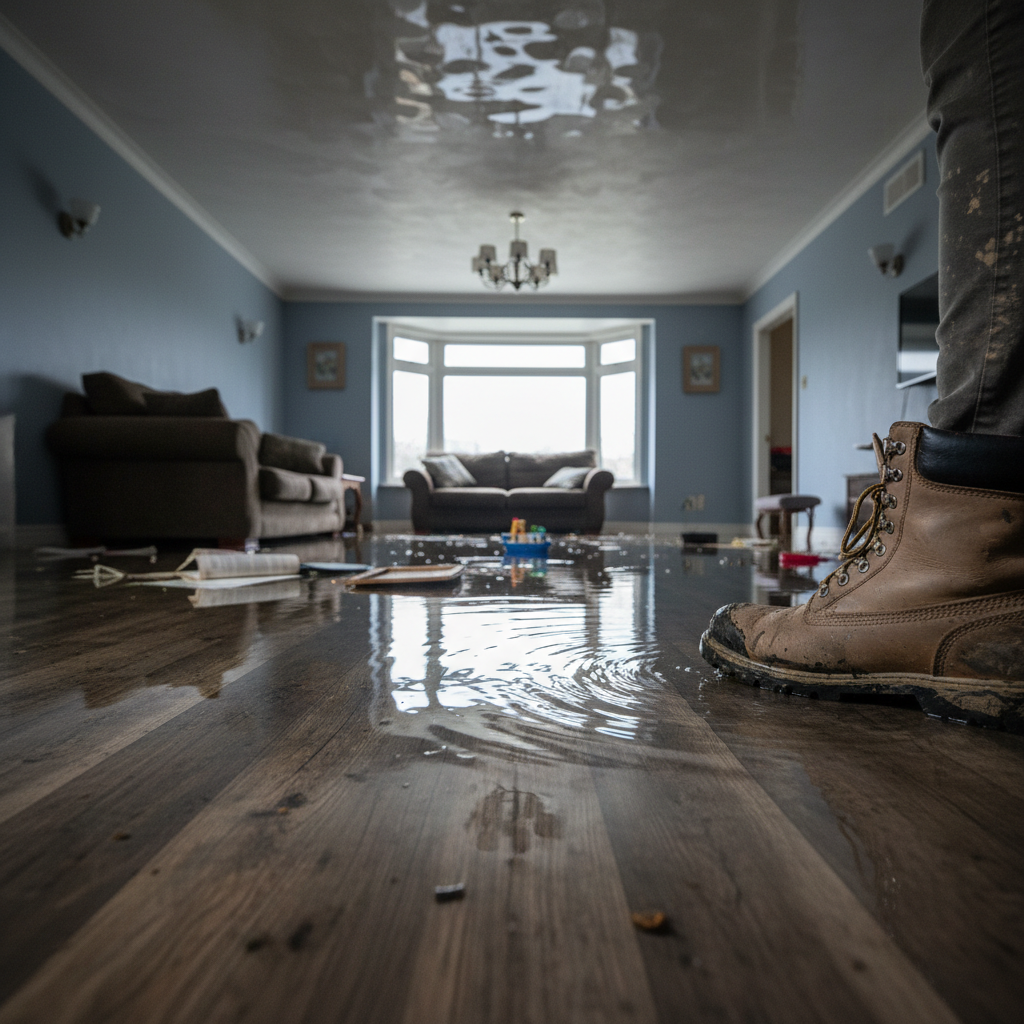
Technicians dispatched to your area right now.
Chaos becoming
order.
Click any phase to understand what's happening, why it matters, and what you should see at each stage.
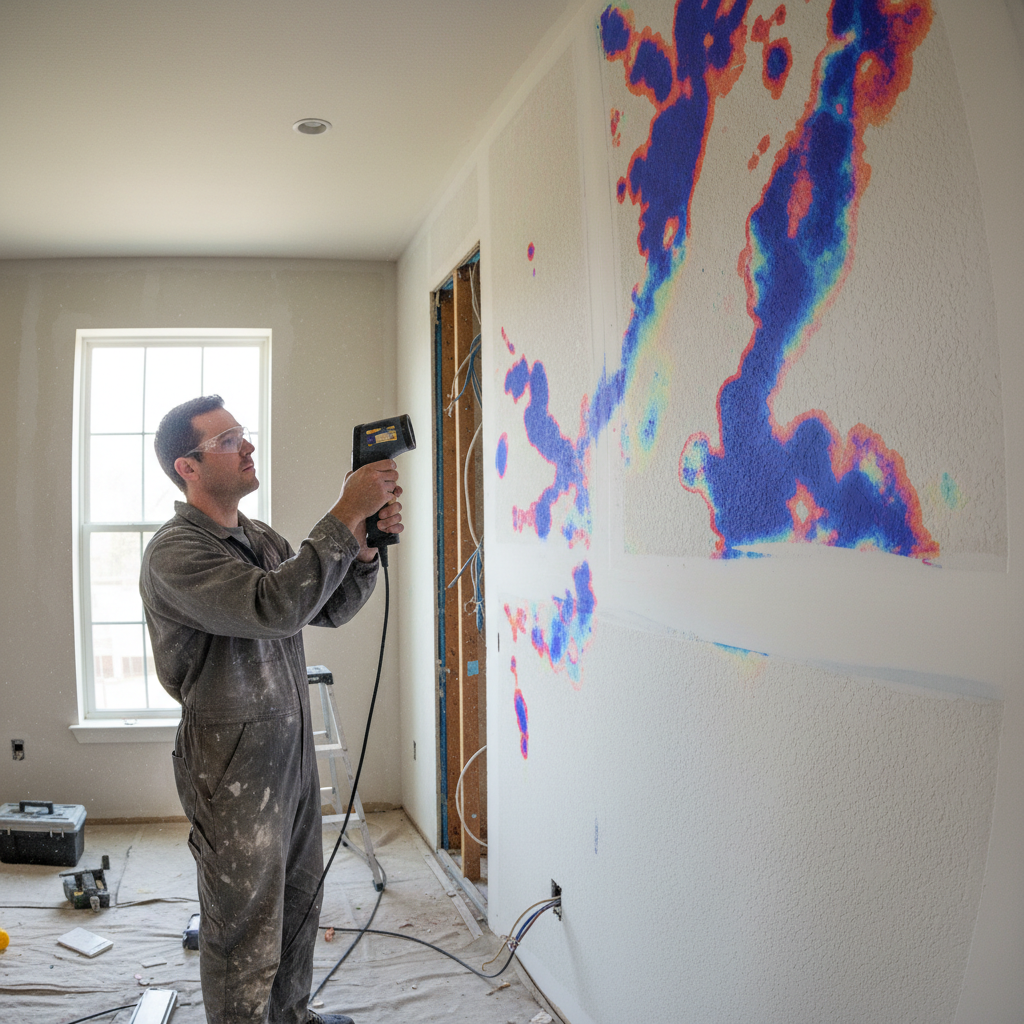
Moisture Mapping
What's Happening
Before a single fan is placed, our technicians walk every affected room with FLIR infrared cameras and pinless moisture meters. We build a complete moisture map — walls, subfloor, ceiling cavities — so nothing hides.
Why It Matters
Water travels. It follows framing, insulation, and gravity into spaces you cannot see. Skipping this step means missing moisture pockets that become mold colonies within 48 hours.
What You'll See
A printed or digital moisture map with moisture readings in every affected zone, baseline numbers for your insurance adjuster.
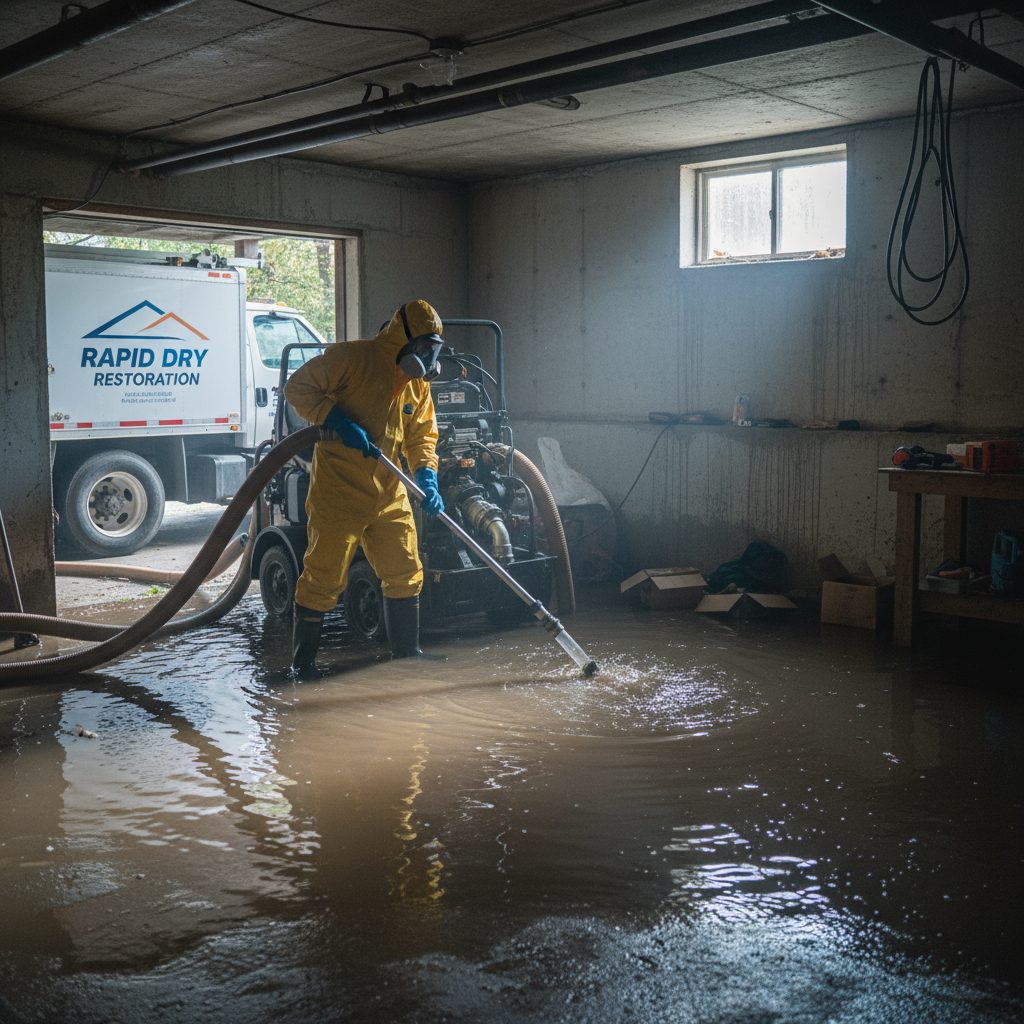
Water Extraction
What's Happening
Truck-mounted extractors pull standing water at 25–30 gallons per minute. For sewage or black water, we deploy submersible pumps and containment barriers before any personnel enter.
Why It Matters
Every hour of standing water increases structural saturation depth by 1–2 inches. Class 1 damage becomes Class 3 in under 24 hours if extraction is delayed.
What You'll See
Visible water gone within 2–4 hours. Subfloor and carpet may still feel damp — that is normal. The drying phase handles residual saturation.
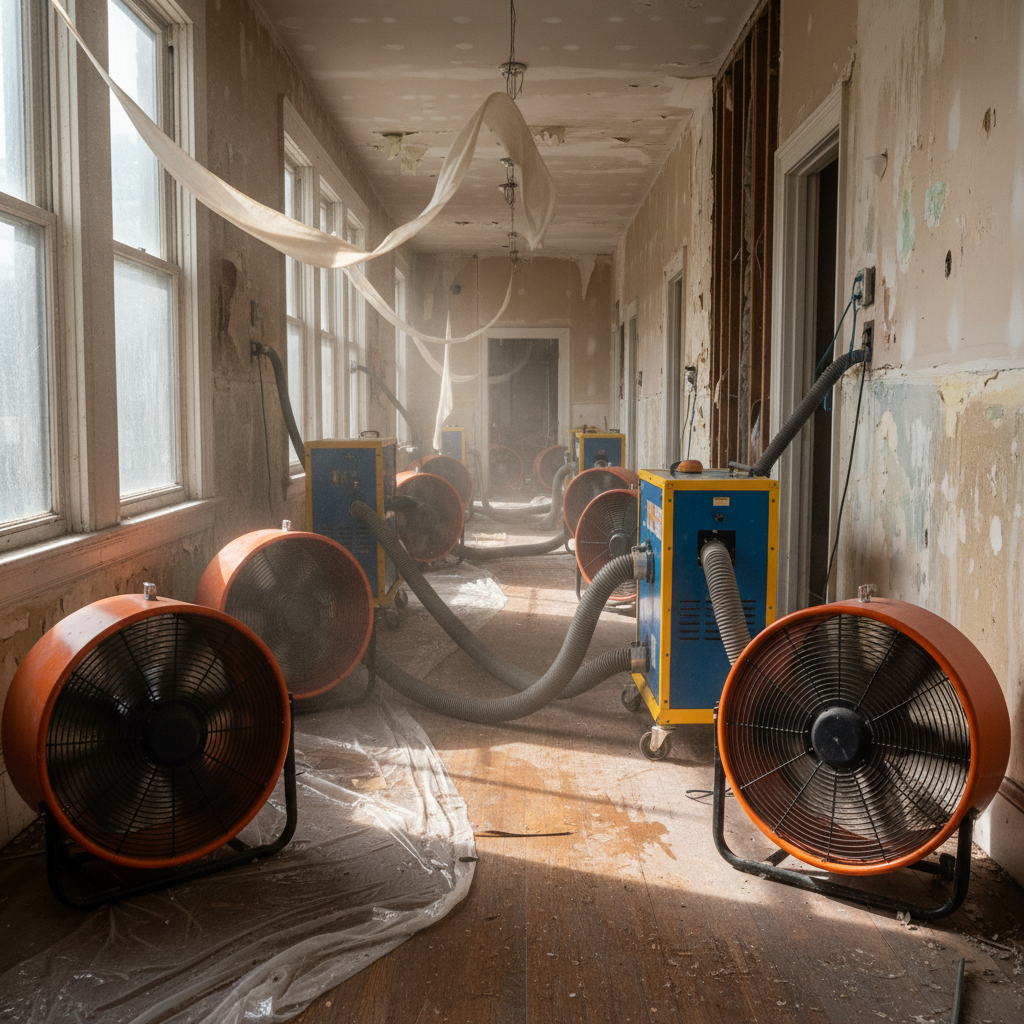
Structural Drying
What's Happening
Industrial LGR dehumidifiers and high-velocity air movers are positioned according to a psychrometric drying plan — not guesswork. Desiccant units handle below-freezing and extreme humidity conditions.
Why It Matters
Structural materials hold water at the molecular level. Surface dry is not structural dry. We target wood moisture content below 16% before equipment is removed.
What You'll See
Multiple large machines running 24/7 for 3–5 days. Daily moisture readings logged and reported. Equipment is not removed until target readings are hit.
Antimicrobial Treatment
What's Happening
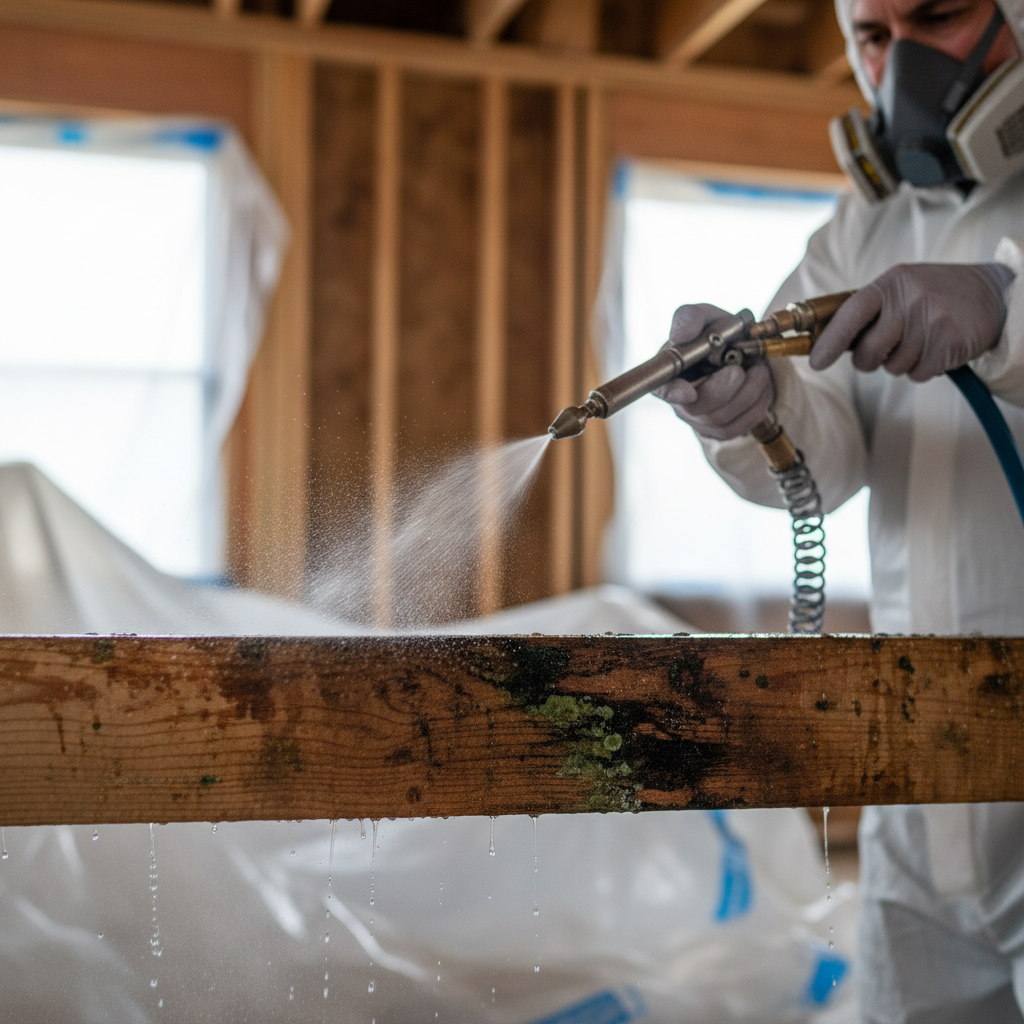
Exposed framing, subfloor, and wall cavities receive EPA-registered antimicrobial treatment after structural drying is confirmed. All treated surfaces are documented with photo evidence.
Why It Matters
Even after drying, mold spores can activate when humidity spikes. Antimicrobial treatment neutralizes existing spore load and creates a residual barrier that lasts 30–90 days.
What You'll See
Technicians in PPE applying liquid treatment with pump sprayers. A faint clean scent. Documentation of every treated surface included in your final report.
Final Clearance
What's Happening
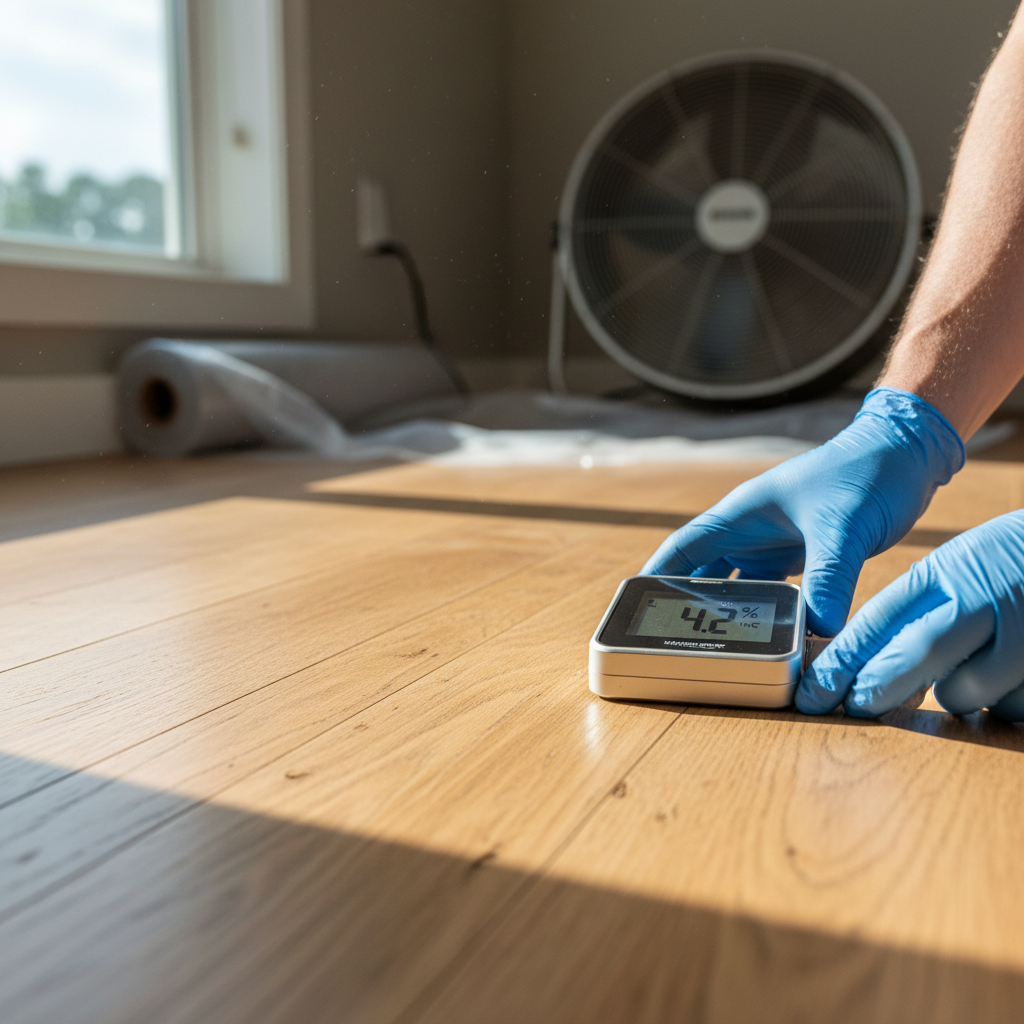
A final moisture sweep confirms every zone meets IICRC S500 dryness standards. The complete job file — initial assessment, daily readings, extraction logs, antimicrobial certificates — is packaged for your insurer.
Why It Matters
Insurance adjusters need documentation that matches IICRC standards. A clean, organized file closes claims faster and reduces disputes. We have a 98% first-submission approval rate.
What You'll See
A restored space that smells like clean wood, not mildew. A complete digital job file ready to submit to your insurance carrier within 24 hours of job close.
Every phase is documented and delivered in a job file built for insurance claims.
Start Your AssessmentKnow your damage
before you call.
What is the water source?
Estimated affected area?
Single room
Multiple rooms
Whole floor
How long has water been standing?
Is mold visible or suspected?
Insurance claim status?
Your Assessment Result
Prioritized Action Plan
Mold assessment needed. Suspected or visible mold requires air quality testing and containment before restoration begins.
Estimated drying window: 3–7 days for 200 sq ft affected area with proper equipment placement.
Low–Moderate
Respond: Within 24 hours
“Restore arrived at 3:14 a.m. I remember the time because I was watching the clock. By sunrise, the water was out and three industrial dryers were running. My adjuster called the documentation the cleanest file he'd seen in two years.”
Margaret Holloway
Questions worth
asking at 2 a.m.
Water damage is disorienting. Here are the questions homeowners, property managers, and adjusters ask most — answered without the runaround.
Still have questions?Our average dispatch time is 47 minutes for the greater metro area. For critical Category 3 (sewage/black water) calls, we prioritize immediately — a crew is typically on-site within 60 minutes regardless of time. We operate 24 hours a day, 365 days a year. There is no after-hours surcharge for emergency response.
Most standard homeowner's policies cover sudden and accidental water damage — burst pipes, appliance failures, and storm-related leaks. Gradual leaks or flooding from outside typically require separate endorsements. We work directly with all major carriers and provide a complete IICRC-compliant documentation package. Our 98% first-submission approval rate means fewer disputes and faster claim resolution.
For clean water (Category 1) damage, most homeowners can remain in the property. For gray water (Category 2) and black water (Category 3) situations, we strongly recommend temporary relocation for the safety of occupants, particularly children and elderly family members. We can provide documentation for your insurance carrier to cover temporary living expenses in those cases.
We do not remove equipment based on time alone. We take daily moisture readings in every affected zone using calibrated meters and compare against IICRC S500 dryness standards. Your final clearance report includes a complete log of daily readings from initial baseline to confirmed dry — every zone, every day. You will see the numbers, not just take our word for it.
Black water (IICRC Category 3) contains sewage, bacteria, and pathogens that pose serious health risks. This includes sewage backups, toilet overflows, and most flood water from outside the structure. It requires full PPE for all personnel, containment barriers to prevent cross-contamination, complete removal of all porous materials (drywall, insulation, carpet) in affected zones, and EPA-registered biocide treatment of all hard surfaces. We never attempt to dry and save Category 3 porous materials.
Yes. Pre-existing mold is common in homes with older moisture history. We conduct air quality testing to establish baseline mold counts, contain affected areas to prevent spore spread during restoration, remediate existing mold growth per IICRC S520 standards, and document all findings for your insurance carrier. Pre-existing mold coverage varies by policy — we can help you understand what is and is not covered before work begins.
The first dry morning
starts with one call.
Available now. Dispatched in under an hour.